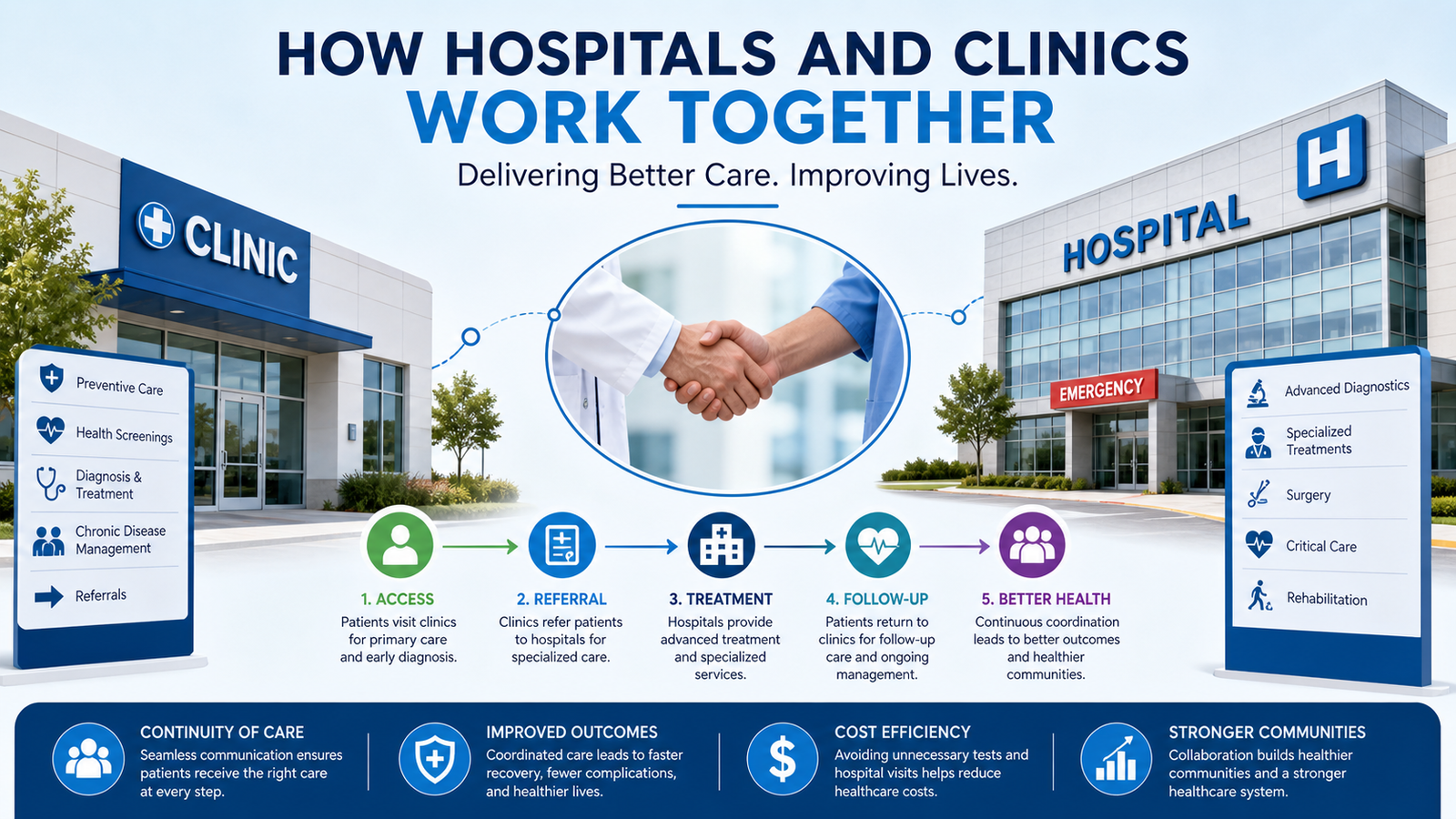
How Hospitals and Clinics Work Together to Deliver Better Patient Care
Discover how hospitals and clinics collaborate to improve patient outcomes, streamline treatment, and provide comprehensive, efficient healthcare services.
Modern healthcare is no longer about isolated treatment—it’s about coordination, communication, and continuity of care. Hospitals and clinics play different but complementary roles in the healthcare system. When they work together effectively, patients benefit from faster diagnoses, better treatment outcomes, and a more seamless healthcare experience.
Clinics often serve as the first point of contact, focusing on preventive care, early diagnosis, and routine treatments. Hospitals, on the other hand, provide advanced diagnostics, specialized treatments, surgeries, and emergency care. The collaboration between these two healthcare settings creates a well-rounded system that prioritizes patient well-being at every stage.
Understanding the Roles of Clinics and Hospitals
Clinics: The Frontline of Healthcare
Clinics are typically smaller healthcare facilities that provide outpatient services. They are often community-based and accessible, making them ideal for routine checkups, vaccinations, minor illnesses, and chronic disease management.
Key functions of clinics include:
- Preventive care and health screenings
- Diagnosis of common illnesses
- Management of chronic conditions like diabetes or hypertension
- Referrals to specialists or hospitals when needed
Clinics emphasize early intervention, which helps prevent conditions from worsening.
Hospitals: Centers for Advanced Care
Hospitals are larger institutions equipped to handle complex medical conditions. They provide both inpatient and outpatient services and have specialized departments such as cardiology, neurology, and surgery.
Key functions of hospitals include:
- Emergency and trauma care
- Surgical procedures
- Intensive care units (ICUs)
- Advanced diagnostic services
- Specialized treatments and therapies
Hospitals are essential for managing severe, life-threatening, or complex health issues.
The Importance of Collaboration
When clinics and hospitals work together, they create a coordinated healthcare system that ensures patients receive the right care at the right time.
1. Seamless Patient Referrals
One of the most important aspects of collaboration is the referral system. When a clinic identifies a condition that requires specialized treatment, it refers the patient to a hospital.
For example, a patient visiting a clinic for chest pain may be referred to a hospital for advanced cardiac testing. This ensures timely diagnosis and treatment, reducing the risk of complications.
2. Continuity of Care
After hospital treatment, patients often return to clinics for follow-up care. This ensures that recovery is monitored and any complications are addressed early.
Continuity of care includes:
- Post-surgery follow-ups
- Medication management
- Rehabilitation support
- Ongoing monitoring of chronic conditions
This coordinated approach improves long-term health outcomes.
3. Shared Medical Records
Digital health records play a crucial role in collaboration. When clinics and hospitals share patient information, healthcare providers can make informed decisions quickly.
Benefits of shared records include:
- Reduced duplication of tests
- Faster diagnosis
- Improved treatment accuracy
- Better communication between providers
Electronic Health Records (EHRs) help bridge the gap between different healthcare providers.
Enhancing Patient Experience
Reduced Waiting Time
When clinics handle routine cases and hospitals focus on complex treatments, patient flow becomes more efficient. This reduces overcrowding in hospitals and shortens waiting times.
Personalized Care
Collaboration allows healthcare providers to understand a patient’s complete medical history. This leads to more personalized treatment plans tailored to individual needs.
Better Accessibility
Clinics are usually located within communities, making healthcare more accessible. Patients can receive initial care locally and only visit hospitals when necessary.
Role of Technology in Collaboration
Technology has significantly improved how hospitals and clinics work together.
Telemedicine
Telemedicine allows clinics to consult with hospital specialists remotely. This is especially beneficial in rural or underserved areas.
Benefits include:
- Faster expert consultations
- Reduced need for travel
- Immediate medical advice
Health Information Systems
Integrated health systems allow real-time sharing of patient data between clinics and hospitals. This ensures that all healthcare providers are on the same page.
Mobile Health Applications
Patients can use apps to track appointments, access medical records, and communicate with healthcare providers. This improves engagement and adherence to treatment plans.
Coordinated Care for Chronic Diseases
Chronic conditions such as diabetes, heart disease, and asthma require long-term management. Collaboration between clinics and hospitals ensures comprehensive care.
Example Workflow:
- A clinic diagnoses a patient with diabetes.
- The patient is referred to a hospital for specialized evaluation.
- The hospital develops a treatment plan.
- The clinic monitors the patient regularly and manages medications.
This coordinated approach helps prevent complications and improves quality of life.
Emergency and Critical Care Coordination
In emergencies, clinics play a crucial role in initial assessment and stabilization. They then coordinate with hospitals for advanced care.
For example:
- A patient with severe injury is stabilized at a clinic
- The clinic arranges immediate transfer to a hospital
- The hospital provides emergency surgery and intensive care
This rapid coordination can save lives.
Benefits of Hospital-Clinic Collaboration
1. Improved Patient Outcomes
Patients receive timely and appropriate care, leading to better recovery rates.
2. Cost Efficiency
Avoiding unnecessary tests and hospital visits reduces healthcare costs for both patients and providers.
3. Resource Optimization
Hospitals can focus on critical cases while clinics handle routine care, ensuring efficient use of resources.
4. Enhanced Communication
Regular communication between healthcare providers reduces errors and improves treatment quality.
Challenges in Collaboration
Despite its benefits, collaboration between hospitals and clinics faces several challenges:
Lack of Integrated Systems
Not all healthcare facilities use compatible digital systems, making data sharing difficult.
Communication Gaps
Miscommunication between providers can lead to delays or errors in treatment.
Resource Limitations
Smaller clinics may lack the resources to implement advanced technologies.
Patient Awareness
Patients may not fully understand the importance of follow-ups or referrals, affecting continuity of care.
Solutions to Improve Collaboration
1. Implementing Unified Health Systems
Adopting standardized electronic health records can improve data sharing and communication.
2. Strengthening Referral Networks
Clear protocols for referrals ensure that patients receive timely and appropriate care.
3. Training Healthcare Professionals
Regular training programs can improve coordination and communication skills among healthcare providers.
4. Patient Education
Educating patients about the importance of follow-ups and coordinated care can enhance treatment outcomes.
The Future of Integrated Healthcare
The future of healthcare lies in integration. As technology continues to evolve, hospitals and clinics will become more connected, creating a patient-centered system.
Key trends include:
- Artificial intelligence for diagnosis and treatment planning
- Remote patient monitoring
- Advanced telehealth services
- Data-driven decision-making
These advancements will further strengthen collaboration and improve healthcare delivery.
Conclusion
The collaboration between hospitals and clinics is essential for delivering high-quality, patient-centered care. By combining the accessibility of clinics with the advanced capabilities of hospitals, healthcare systems can provide comprehensive and efficient services.
From early diagnosis and preventive care to specialized treatment and recovery, this partnership ensures that patients receive continuous and coordinated care at every stage. While challenges exist, ongoing advancements in technology and healthcare practices are paving the way for a more integrated and effective system.
Ultimately, when hospitals and clinics work together, patients benefit the most—with better outcomes, improved experiences, and a healthier future.
FAQs
1. What is the main difference between a hospital and a clinic?
Clinics provide outpatient and routine care, while hospitals offer advanced treatments, surgeries, and emergency services.
2. Why is collaboration between hospitals and clinics important?
It ensures continuity of care, faster diagnosis, and better treatment outcomes for patients.
3. How do clinics refer patients to hospitals?
Clinics assess the patient’s condition and provide a referral to a hospital for specialized care or advanced diagnostics.
4. What role does technology play in healthcare collaboration?
Technology enables data sharing, telemedicine consultations, and improved communication between healthcare providers.
5. How does collaboration reduce healthcare costs?
It prevents unnecessary tests, reduces hospital overcrowding, and ensures efficient use of medical resources.

Related Posts

Top Blogging Trends to Follow in 2026

Top 10 Healthy Habits for a Better Life in 2026
